The disrupted macro environment of the past several years has presented both challenges and opportunities across financial markets. Since the beginning of the Covid pandemic in 2020, investors have weathered market volatility fuelled first by record-breaking inflation and now by interest rates that are expected to stay higher for longer (see Figure 1), hampering economic growth around the globe.
Challenged backdrop creates secondary opportunities
Against this backdrop, infrastructure secondaries have been a net beneficiary and the segment continues to see significant growth, both in terms of a substantial increase in deal flow coming to market and investor interest, reflected in an increase in capital flows. The latter is being driven in part by demand for infrastructure more broadly, reflecting the asset class having historically shown resilience in performance and lower volatility during periods of disruption, as we will show, as well as the unique opportunity via secondaries to access a traditionally longer-dated asset class via a shorter-duration entry point.
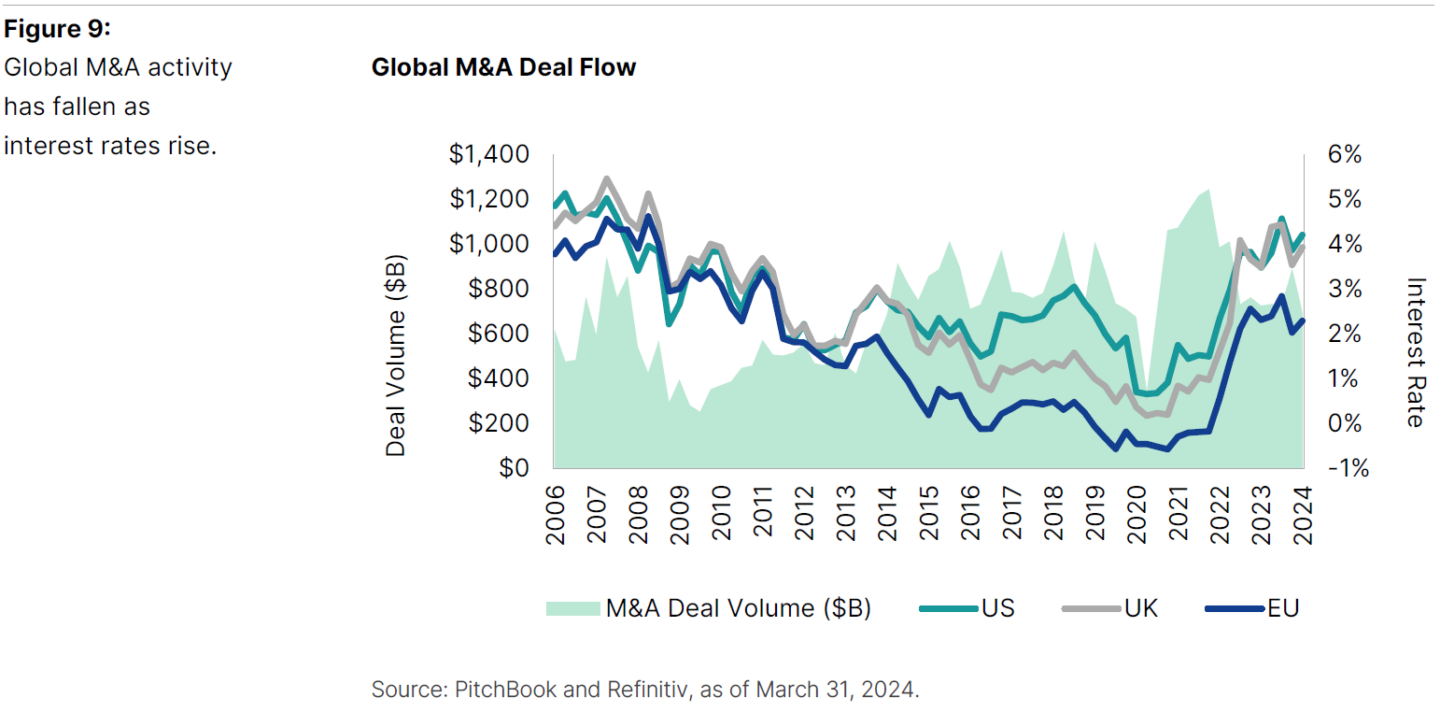
On the increase in deal opportunities, the recent rise in the cost of capital across the market, coupled with a wider slowdown in M&A activity and increase in public market volatility, has impacted fund managers’ ability to create liquidity for their investors via the traditional paths of private sales or IPOs of their portfolio companies. This liquidity crunch has created an unprecedented investment opportunity for secondary market players, as both investors and fund managers seek solutions to free up capital to meet near-term cash needs, fund new investments and manage portfolios.
Providing liquidity to LPs at a critical time has in turn allowed secondary investors to access an even deeper pool of investment opportunities, often accessing investments at entry valuations that represent a meaningful discount to fair market value, which in turn has the potential to drive enhanced returns. This trend is expected to continue through the rest of 2024 and into 2025 as LP balance sheets find their footing.

Infrastructure: resilience in the face of volatility
With the halfway point in 2024 having now passed, the economic growth outlook is still varied and muted, with GDP growth projections for 2024 of 2.4% and 0.8% for the US and Europe, respectively.¹
Despite recent improvements in elements of the macro environment, including signs that rates may have peaked, investors are still wary of an unpredictable market and may look to asset classes that can offer resilience. This has fuelled demand for infrastructure as an asset class.
In Figure 2, we highlight the stability of private infrastructure, which has consistently offered lower volatility compared to global equities during periods of market stress.

Notably, private infrastructure has outperformed its listed equivalent during both the Global Financial Crisis (GFC) and the recent downturn during and after the Covid pandemic (see Figure 3). Although not unaffected by economic uncertainty, these consistent historical trends suggest that private infrastructure provides downside protection and upside opportunities for investors in a volatile market.

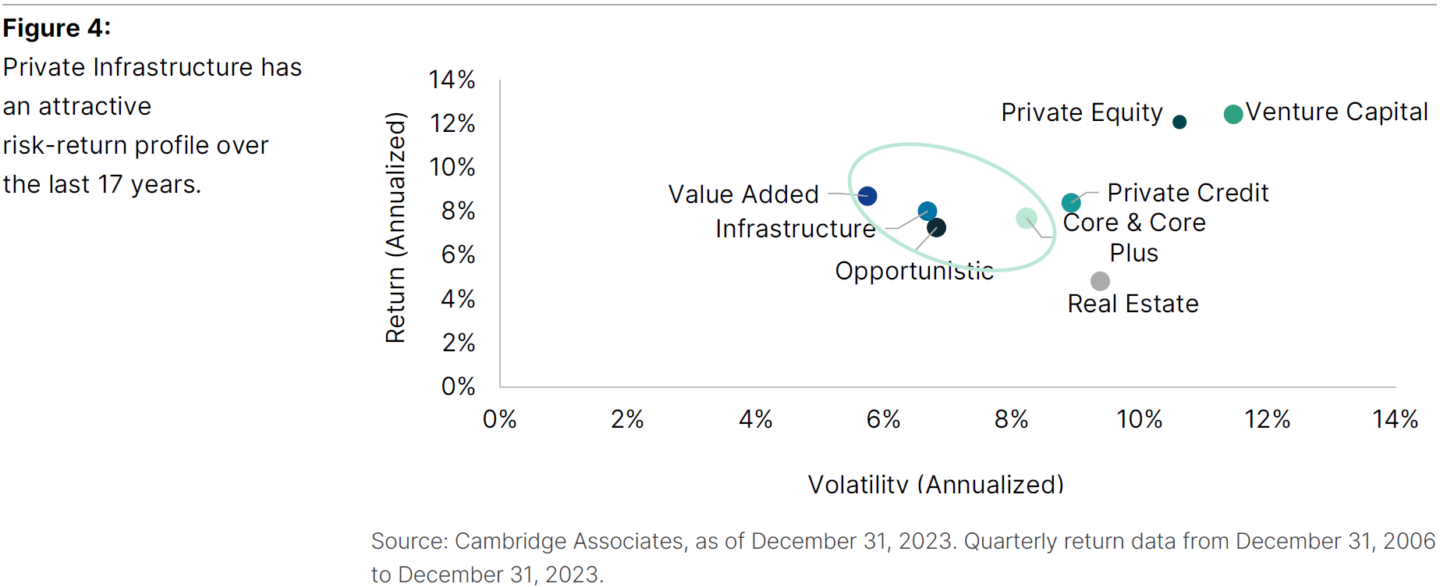
Across private markets, infrastructure has similarly displayed an attractive risk-return profile over the past 17 years, with the lowest annualized volatility among private market asset classes and performance that is aligned with direct private credit (see Figure 4). When you look at the market by the main infrastructure fund strategies, the profiles remain consistent around performance, with some slight divergence in risk.
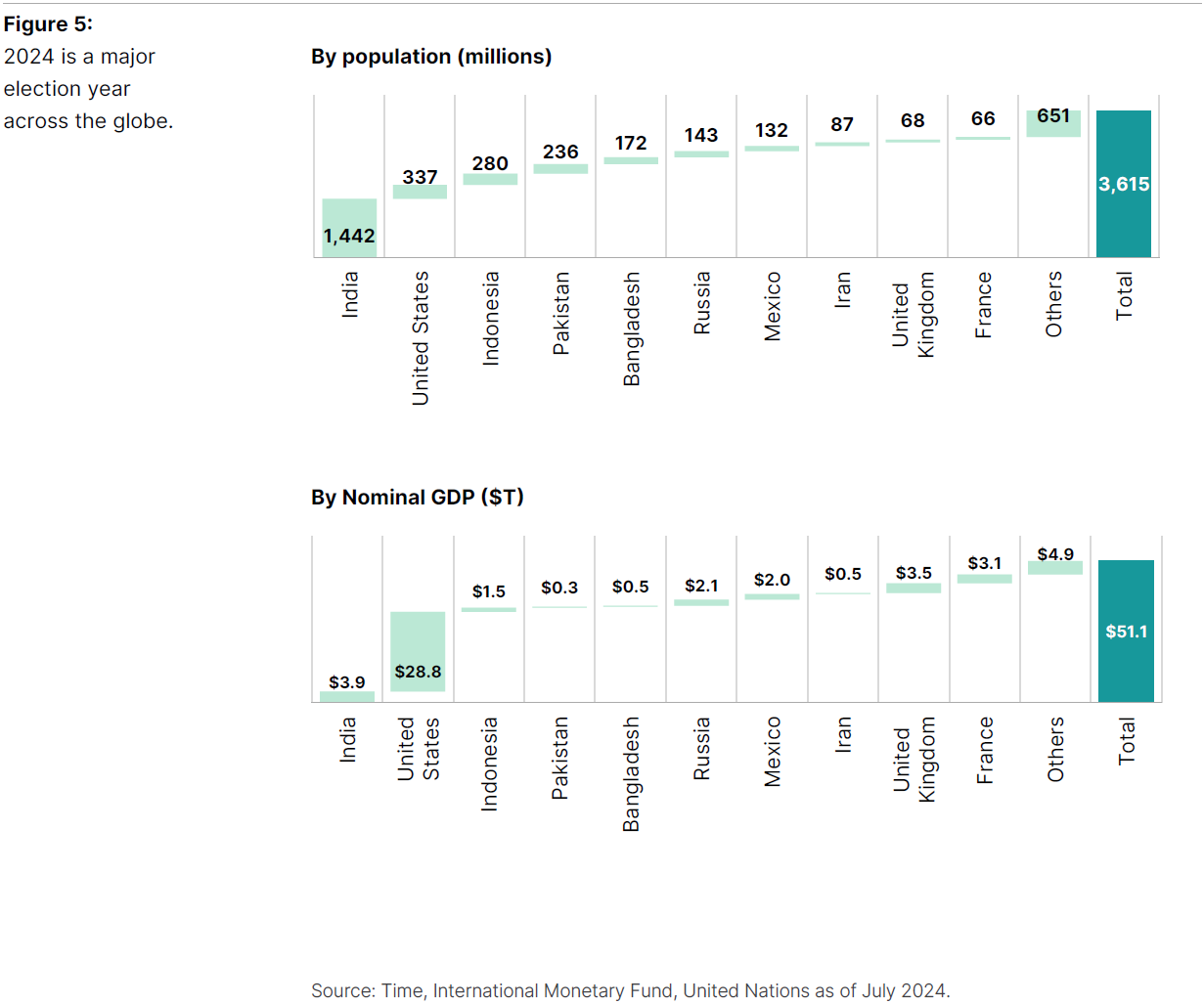
As we look to H2 2024 and beyond, macro volatility will be further fueled by an uncertain geopolitical backdrop, with 42% of countries by count of global GDP (41% of world population) facing national elections this year (see Figure 5).² A change in government can affect regulation and national budgets, as well as contribute to uncertainty around foreign relations, especially during a period that continues to be characterized by a popular trend towards deglobalization.
From defense to offense
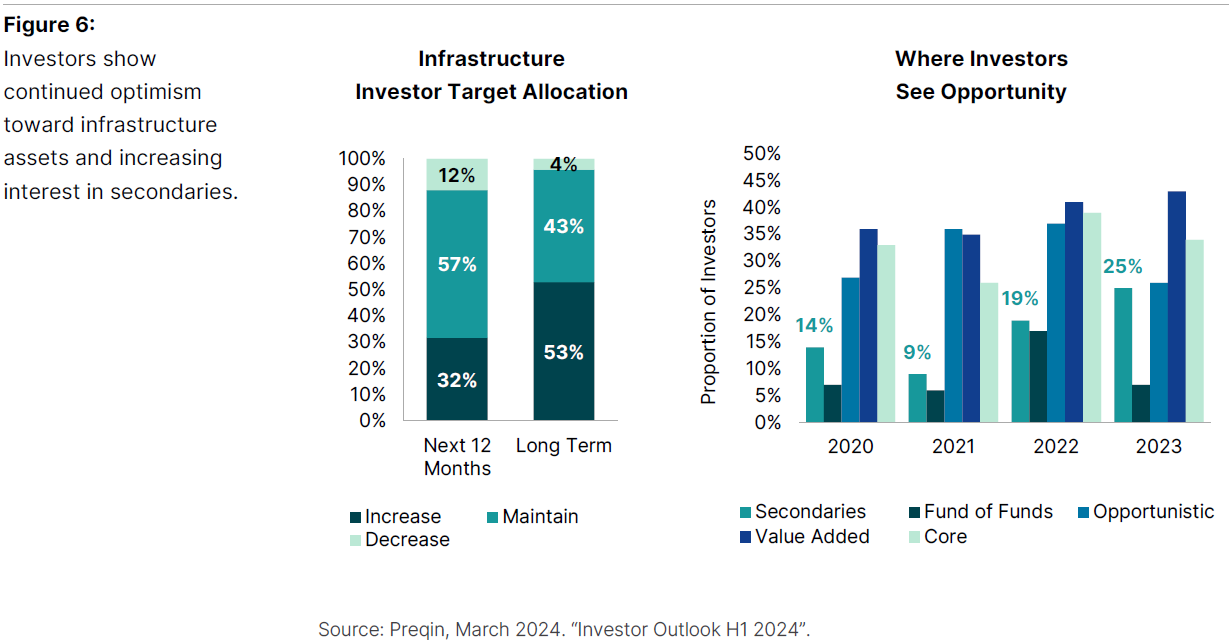
Infrastructure investors plan to increase or maintain their allocation to the asset class in both the short term and the long term (see Figure 6). Additionally, a growing portion of investors – 25% in 2023, up from 9% in 2021 – see opportunities in secondaries in particular, a point to which we will return in the next section.
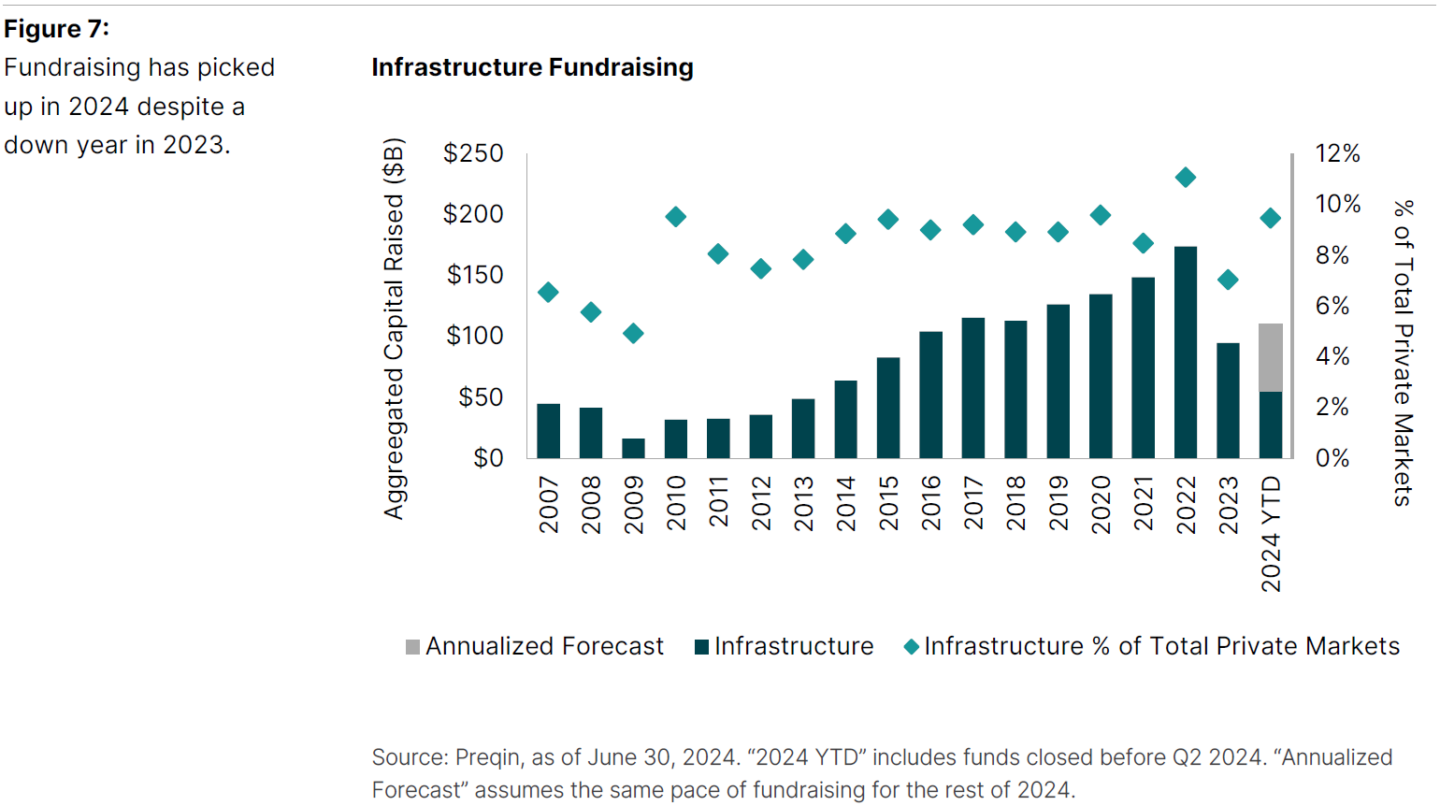
As this positive sentiment toward infrastructure investment grows, the size of the market and breadth of opportunities will continue to expand. From 2007 to 2022, annual private infrastructure capital formation grew by around 3.8x, reaching its highest point of $174bn. This compares to around 2.3x growth in private markets more broadly over the same period, as shown in Figure 7.
Fundraising in infrastructure did slow meaningfully in 2023, but data for 2024 is showing a significant rebound both in terms of quantum of capital being raised and as a proportion of private markets capital raising.
In addition to infrastructure’s inherent defensive characteristics highlighted above, many investors are keen to play offense via infrastructure and invest behind global economic and societal tail winds such as digitization, decarbonization, deglobalization:
- Digitization: Digital infrastructure assets such as towers, fiber and data centers have become the 21st century utility assets, as data and connectivity have become essential for a functioning economy and given the potential for AI to revolutionize society as we know it.
- Decarbonization: Investment into renewables accelerated as the volatility of global energy markets, energy security considerations that the Russia/Ukraine conflict highlighted, and the ongoing decarbonization of electric grids have taken hold over the past five years.
- Deglobalization: Current trends in geopolitics favour opportunities in the transportation and logistics sectors, as supply chains follow “re-shoring” or “friend-shoring” trends.
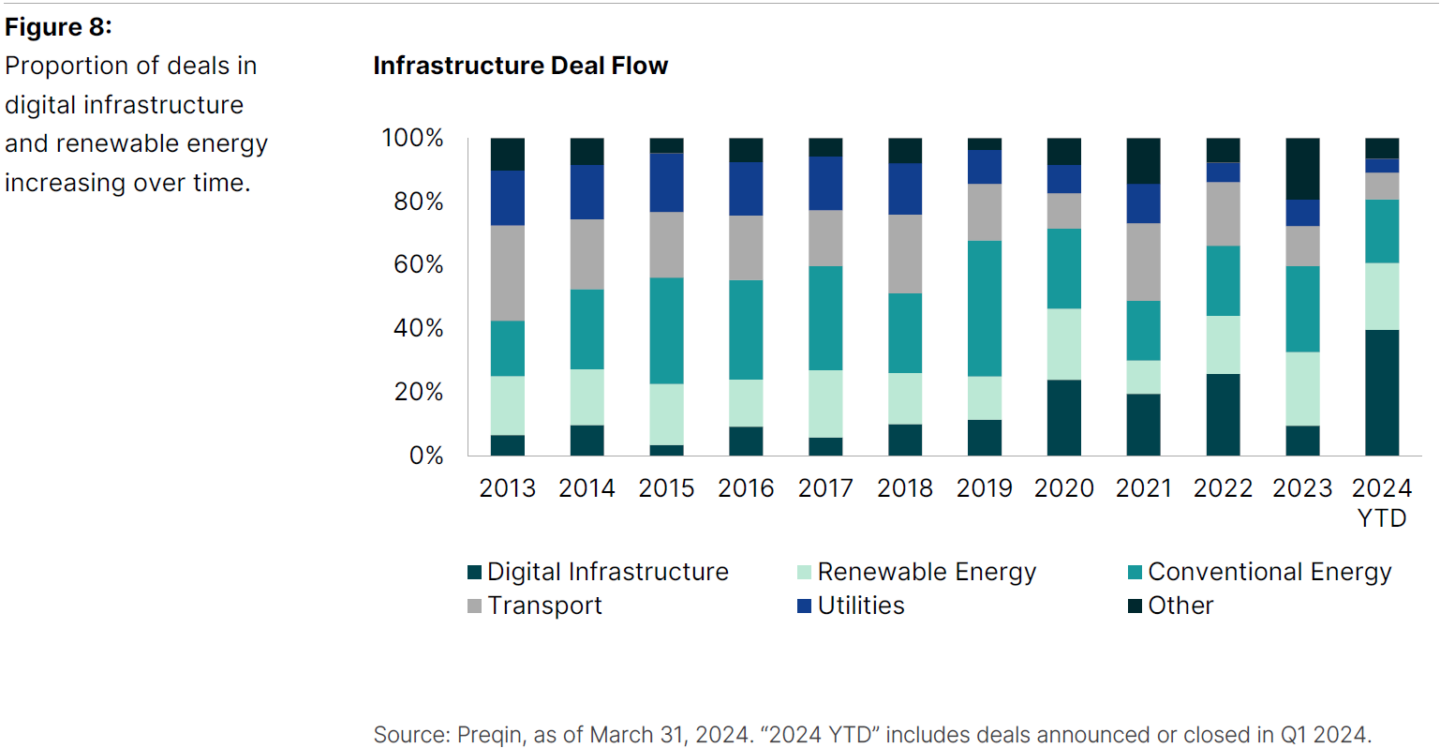
As showcased in Figure 8, and reflecting these trends, Digital infrastructure and renewable energy investments showcased the largest growth in overall infrastructure deal flow over the past three years. We believe that this trend is here to stay in the medium to long term, as the need for investment into these areas continues to increase over time.
Secondary opportunities
All deal activity, including M&A and IPOs, has been impacted by macro uncertainty, geopolitical instability, elevated interest rates, and a widening bid-ask spread (see Figure 9).
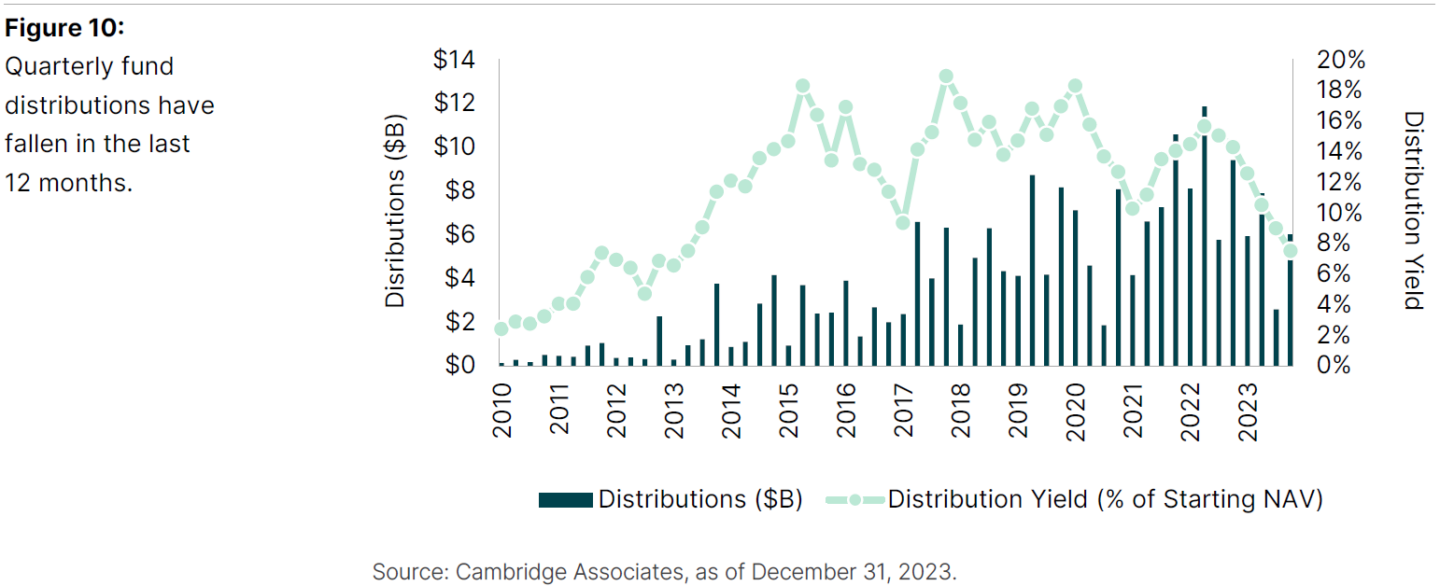
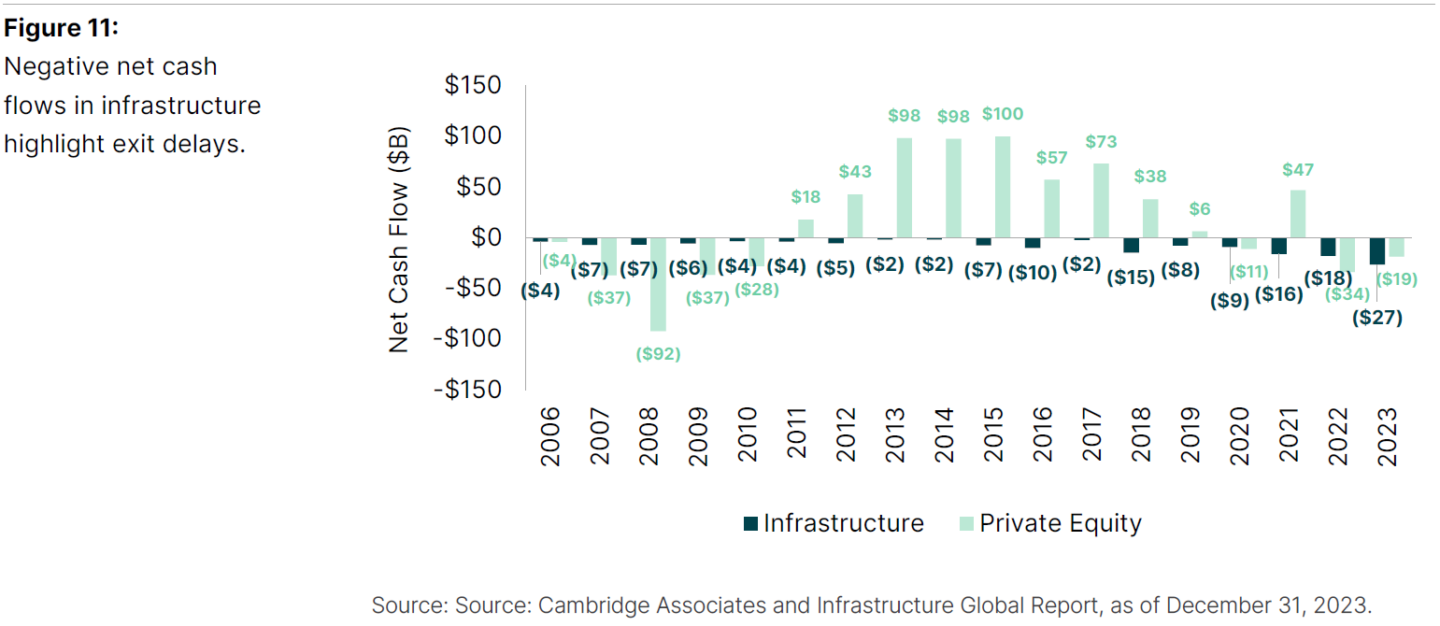
This slowdown has added to demand for liquidity from institutional investors as, with fewer avenues for exits, fund managers are having difficulty returning capital to their LPs as consistently as they have done in the past. Figures 10 and 11 show the fall in quarterly distributions, in actual terms and as a percentage of the size of the market based on starting NAV, and the resulting negative net cash flows for LPs.
Distributions as a percentage of NAV have been below 10% since 2023, while investor cash flows have been in negative territory across both infrastructure and private equity since 2022. These factors have put pressure on LPs’ balance sheets, forcing them to seek new paths to liquidity not only for their near-term cash needs, but also to enable them to commit to newer vintage funds and maintain fund manager relationships.
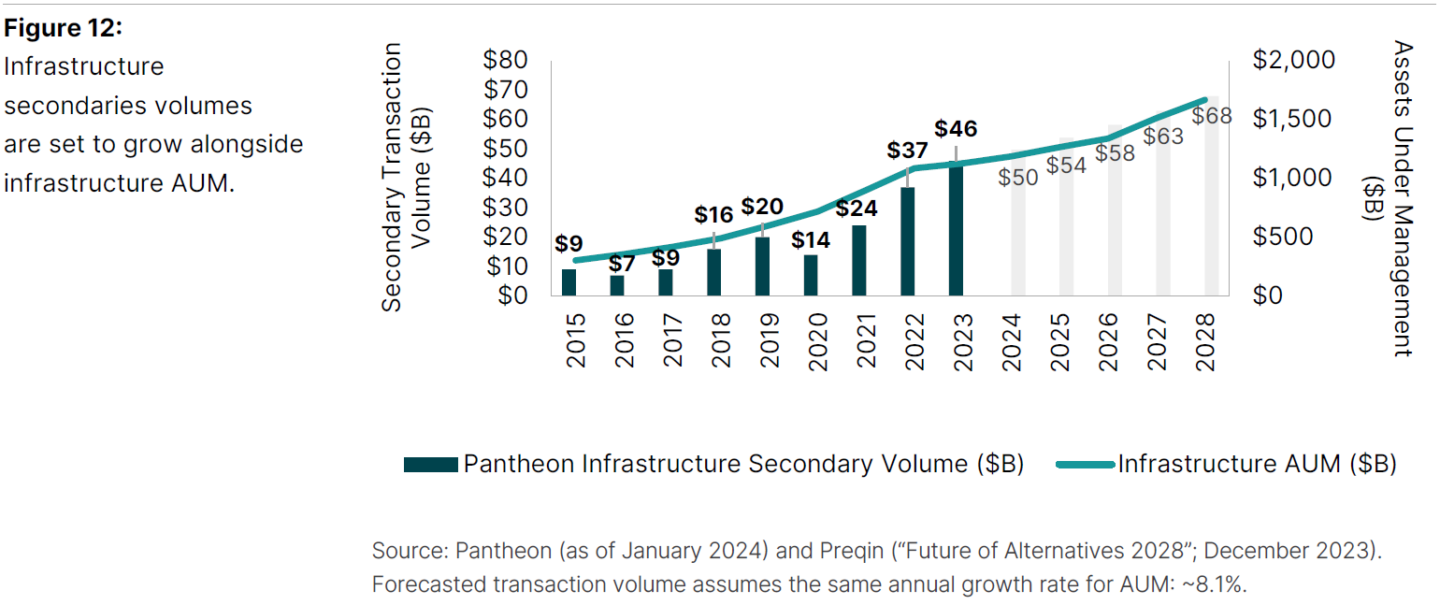
The secondaries market is well-placed to provide solutions to these liquidity problems and has widely benefitted from these dynamics. Infrastructure secondaries in particular saw an unprecedented increase in transaction volume and structuring sophistication in the past 12 months (see Figure 12). This in turn offers opportunities for investors looking to access high-quality infrastructure assets and portfolios.
Looking at Pantheon’s deal flow, transactions completed have grown from $9bn in 2015 to $46bn in 2023, a 23% CAGR. Preqin forecasts suggest infrastructure secondaries deal flow could rise to close to $70bn by 2028.
Underneath these headline trends, through 2023 the infrastructure secondaries market saw a step-change increase in the volume of traditional LP portfolio sales, which accounted for close to 60% of deal volumes in 2023, up from 20-40% between 2020 and 2022. These deals are often driven by reallocation decisions and portfolio management exercises on the part of LPs, liquidity crunches and macroeconomic uncertainty – and this trend has continued in H1 2024.
In parallel, the GP-led secondaries market continues to grow in-line with historical trends, as managers begin to actively use the secondary market to seek growth capital and provide LP liquidity for their most prized assets. Of course, as GP-led transaction opportunities continue to increase, there must be careful consideration of the motivations and conflicts that arise, such as alignment with fund managers, valuations and LP-stakeholder management.

Secondaries Refresher: How the Market Works
We have discussed the reasons for the strong investor demand for infrastructure, and the structural drivers behind the substantial increase in infrastructure secondary deal flow. So, why should investors consider infrastructure secondaries as an allocation option for their portfolios?
Investing in the infrastructure secondary market offers distinct potential benefits to investors compared to directly investing in infrastructure funds, such as:³
- J-curve mitigation: Investors can invest in mature funds and assets, ensuring that capital is immediately put to work generating returns and thus avoiding the “J-curve effect” common in primary investments, where returns are initially negative due to early-stage expenses and capital calls.
- Enhanced diversification: Investors can access a diversified pool of assets across various GPs, sectors, vintages, and geographies, often within a single investment.
- Discounted entry valuation: Infrastructure secondaries is still an inefficient market with a limited buyer universe at scale, providing opportunities to often purchase funds and assets at a discount to their intrinsic value.
- Path to early liquidity: Purchasing mature infrastructure funds and assets allows investors to access infrastructure assets much closer to their eventual realizations – and thus allows for a shorter duration access to liquidity in an otherwise typically long-hold asset class. This can have consequent benefits in the form of enhanced potential returns on an IRR basis.
- De-risked assets: Investments typically involve existing, operational assets with established cash flows and performance histories, reducing development, construction, and operational risks.
As alluded to in Figure 12 above, longer term infrastructure secondary deal flow tracks and is driven by the expansion of capital allocation and the growth in infrastructure primary fundraising and assets under management. Secondary market opportunities are specifically driven by several idiosyncratic dynamics:
Liquidity
For LPs: Many LPs, such as pension funds, endowments, and insurance companies, invest in long-term infrastructure projects that can tie up capital for extended periods. The secondaries market provides a mechanism for these investors to exit their positions before the fund reaches maturity, thereby providing an avenue for earlier liquidity to meet short-term cash needs and to fund new investments.
For GPs: GPs can use the secondary market to offer liquidity solutions to their investors without having to liquidate assets prematurely.
Portfolio management
Investors may need to rebalance their portfolios for various strategic reasons, such as changing risk tolerance, shifting investment strategies, or responding to regulatory requirements. By participating in the secondaries market, investors can diversify their exposure to different infrastructure assets, sectors, and geographies without waiting for new primary investments to materialize.
Market dislocation
The secondary market allows LPs to quickly offload positions during periods of liquidity crunches to shore up their balance sheets.
Regulatory considerations
Regulatory changes can necessitate adjustments in investment strategies. LPs may adjust strategic goals, such as increasing or decreasing exposure to certain types of infrastructure assets, sectors, or regions. The secondary market provides a mechanism to achieve these goals efficiently.
Fund management
GPs can use the secondary market to restructure funds, extend fund life, or create continuation vehicles. This can provide liquidity to existing LPs while allowing GPs to continue to manage their high-quality assets. The secondary market also allows GPs to recycle capital, which can be redeployed into new investment opportunities, enhancing the overall efficiency and performance of their investment programs.
Return potential
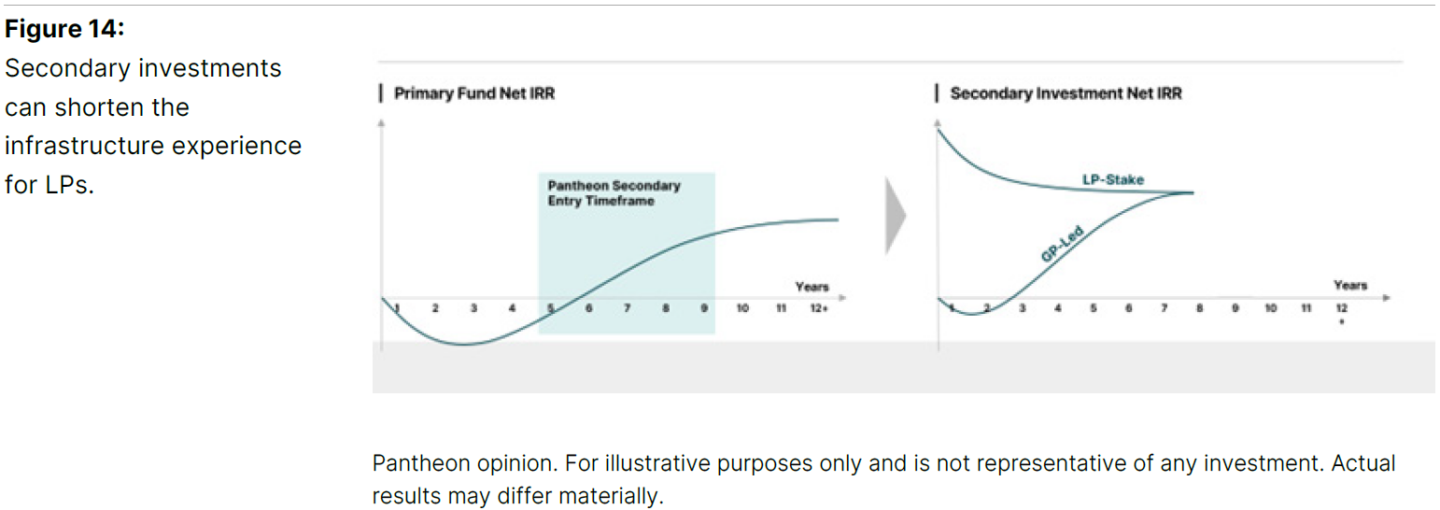
Mapping returns out for secondary vs direct funds typically leads to enhanced performance for secondary strategies on IRR and DPI metrics, given shorter duration, maturity of assets and cash flows, and potential for entry discounts (see Figure 14). Secondary returns are bolstered by an attractive entry point allowing for:
- High quality funds to be targeted as the assets are typically known at entry.
- Early liquidity improving IRRs by targeting assets typically 5-9 years into their lives, with a focus on early distributions realized in shorter hold periods.
- Entry at an inflection point where informational advantage and access allows identification of embedded value yet to be realized.
- Purchasing at discounts to NAV compounding the above effects.
Conclusion: The secondaries opportunity is here to stay
We believe infrastructure secondaries have now passed an inflexion point, with long-term growth drivers that will ensure sustained deal flow and attractive investment opportunities. Specifically, throughout this paper we have shown that:
- Infrastructure is a proven, resilient asset class with lower volatility and attractive returns vs listed benchmarks and in the context of wider private markets.
- Infrastructure is projected to benefit from three global megatrends – digitalization, decarbonization and deglobalization – and this allows investors to allocate to access assets benefitting from structural growth tailwinds.
- Secondaries is an increasingly attractive segment that has seen substantial growth in deal flow and investor interest in the current market, given heightened need for liquidity.
- Secondaries offer a shorter duration access point for investors, with entry pricing that can drive enhanced returns.
- The market also benefits from structural drivers driven by strong primary fundraising, which are forecasted to support long-term growth.
While we anticipate that market conditions may begin to normalize in the next 12-24 months as LP balance sheets begin to find their footing, the underlying trends that have arisen from the choppy market of the past two years will remain present for a number of years to come. Moreover, and regardless of how the macro environment changes, we believe a robust primary fund raising market and the establishment of a consistent infrastructure secondary marketplace will continue to position this segment as an attractive and growing sector in the upcoming years.