A comprehensive guide | Download this article (PDF)
Private infrastructure may offer investors access to long-term cash flows and can offer protection from inflation. As global trends such as decarbonization, digitization, and deglobalization reshape the investment landscape, infrastructure can stand out for its resilience, portfolio diversification benefits, and alignment with macroeconomic tailwinds.
KEY
TAKEAWAYS
Infrastructure provides essential services across sectors like transportation, utilities, digital infrastructure, and renewable energy.
The asset class offers attractive risk-adjusted returns and low volatility, with historical outperformance over public benchmarks.1
Infrastructure assets can serve as a natural hedge against inflation due to contractual inflation linkages.
Secondaries offer liquidity, diversification, and enhanced return potential in a constrained exit environment.
Private infrastructure bridges the gap between private equity and private credit: it offers yield + inflation protection + stability, making it a valuable diversifier.
Pantheon’s platform provides differentiated access, deep expertise, and a robust investment process tailored to private wealth and institutional investors alike.
The rise of AI and clean energy is accelerating demand for digital and renewable infrastructure.
Introduction to the asset class
Infrastructure refers to the physical systems and facilities that support economic and social activity. These include transportation networks such as roads, airports, and railways; utilities like electricity, water, and waste management; digital infrastructure encompassing data centers and fiber networks; and renewable energy sources such as solar, wind, and hydro power.
In a portfolio context, infrastructure occupies a unique position between traditional fixed income and private equity. It can offer stable, long-duration cash flows with lower volatility than equities and higher return potential than bonds.
The lifecycle of infrastructure assets can be categorized into different stages. Greenfield projects involve new developments, with higher risk due to construction and demand uncertainty. Brownfield investments target existing, fully-operational assets with established revenue streams and lower risk. Platforms containing both brownfield and greenfield assets (sometimes known as yellowfield) are a middle ground, with operating assets providing downside protection, and future developments giving upside growth potential. The essential nature of infrastructure and its long-term contracts can make it a compelling allocation for investors seeking stability, income, and inflation protection.
The essentials of infrastructure investing
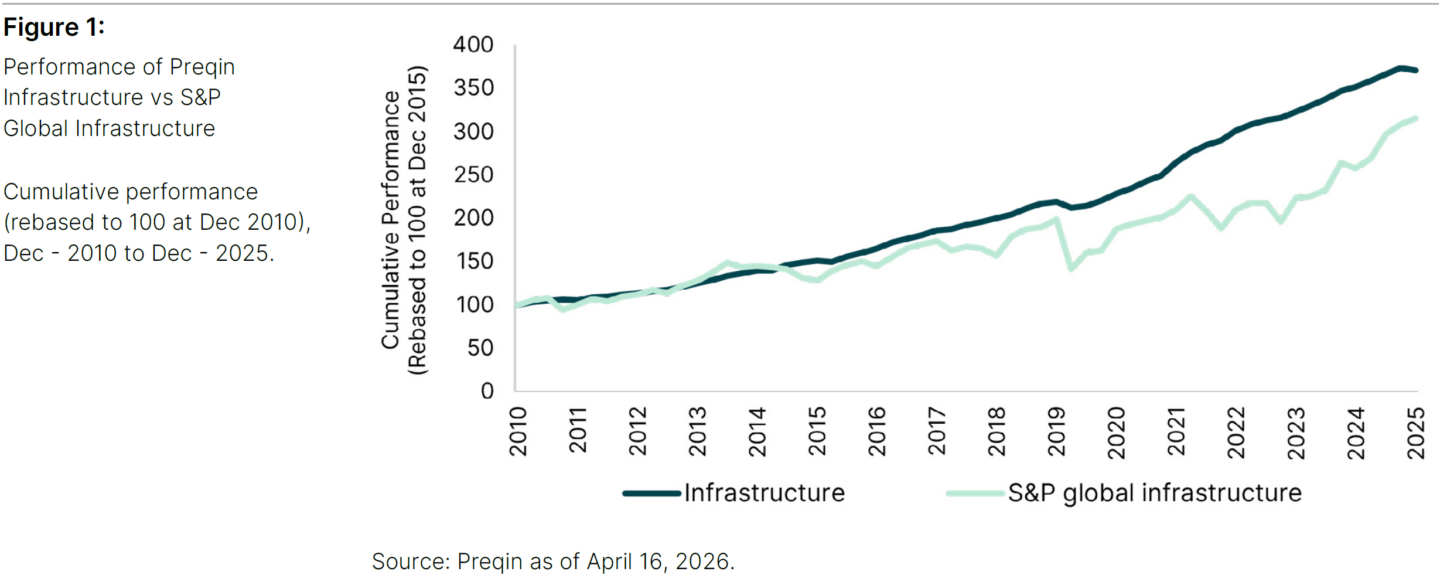
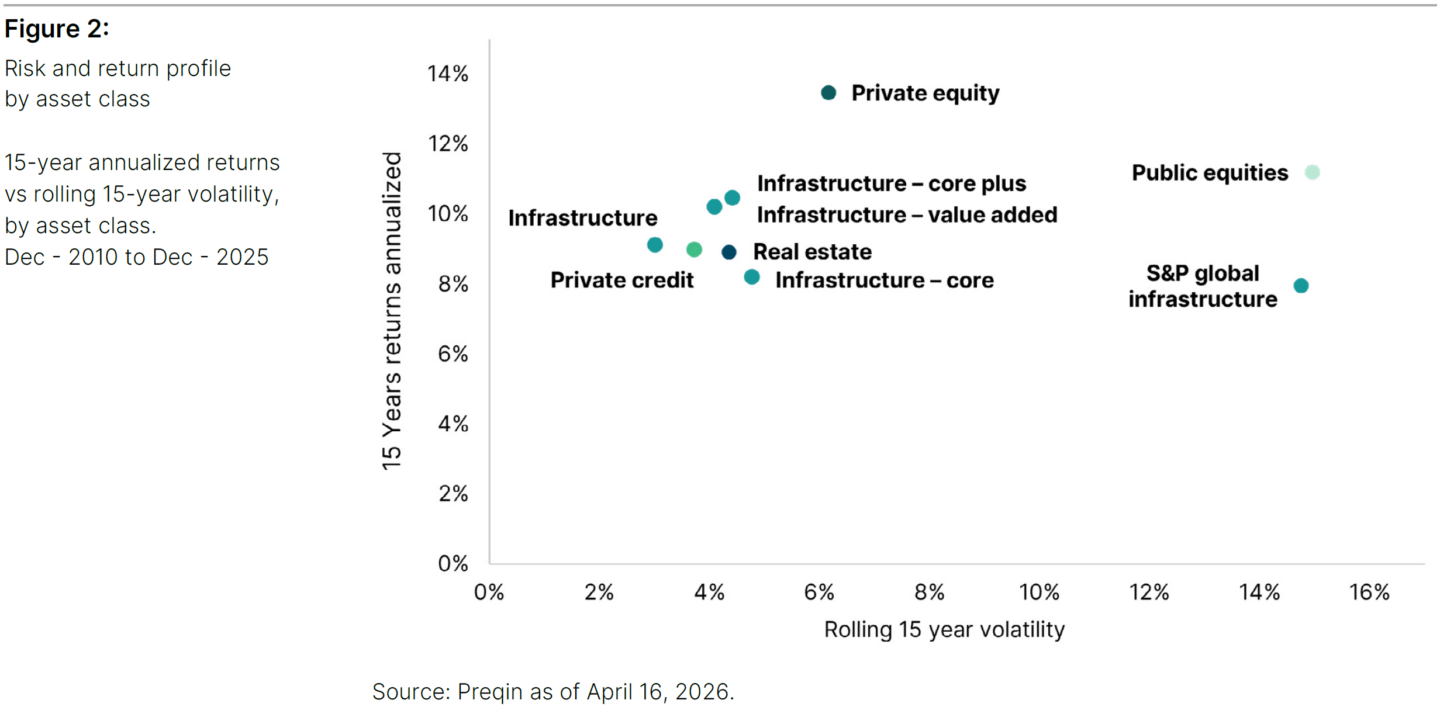
Historically, private infrastructure investments have consistently outperformed public benchmarks.² As of December 31, 2025, the Preqin infrastructure benchmark delivered a 15-year annualized return of 9.12%, compared to 7.96% for the S&P global infrastructure index.³ Infrastructure also exhibits the lowest annualized volatility among private market asset classes, aligning closely with direct private credit.

How infrastructure fits into the private markets landscape
In the broader context of private markets, infrastructure plays a vital role in balancing risk and return. Private equity, while a powerful engine for growth, brings with it heightened volatility. Private credit, by contrast, offers yield with reduced volatility but remains susceptible to credit and interest rate cycles. Infrastructure sits strategically between the two, offering yield, inflation protection, and stability in one package. This makes it a potent diversifier, smoothing private equity’s risk profile while reinforcing the income-generating characteristics of private credit. For investors navigating an increasingly complex macroeconomic landscape, infrastructure is certainly not a niche allocation; it has become a structural necessity.⁴
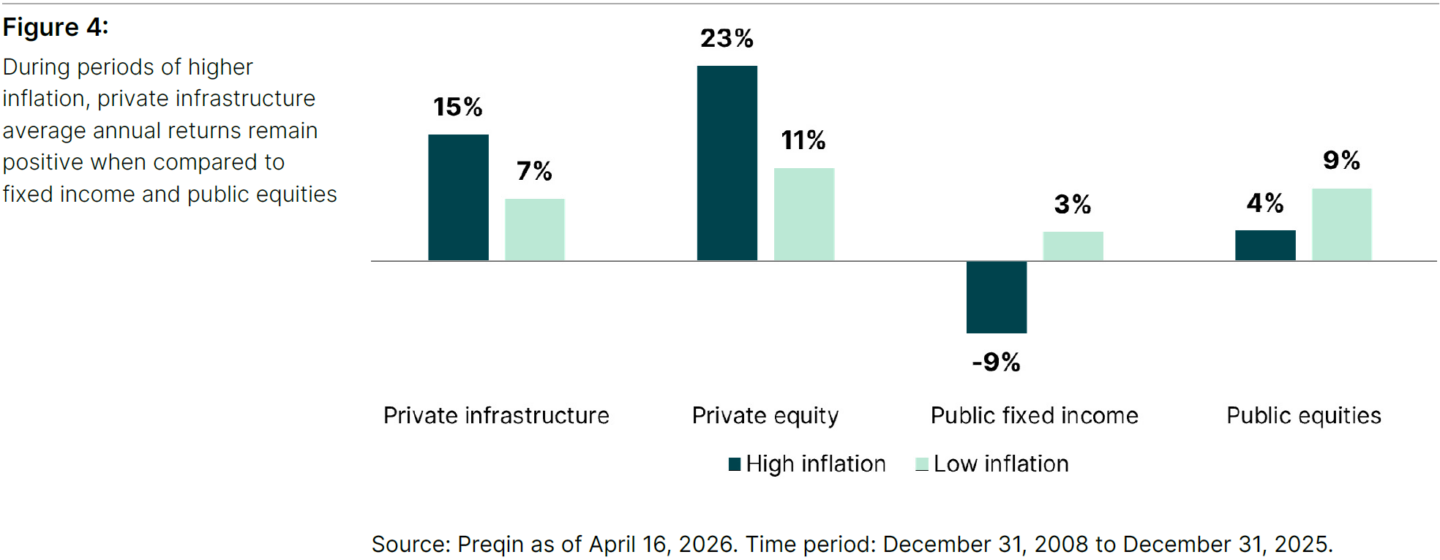
In addition to the performance advantage of infrastructure, investors may find that allocations to the asset class – and other real assets such as real estate or transportation systems – offer protection against inflation. In a period when trade tensions, the threat of tariffs, and rising economic nationalism could pave the way for a more persistent inflationary environment, this may become increasingly valuable.⁵
Accessing private infrastructure
Infrastructure assets may be effective hedges against inflation due to their built-in inflation linkages through regulated tariffs or long-term contracts. This characteristic can preserve real returns in rising rate environments. Portfolio construction in infrastructure can be accessed through various fund structures, including 40-Act funds and SICAVs, which offer regulated access for different investor types. Evergreen vehicles provide continuous exposure and structured liquidity, while secondaries enhance diversification and liquidity, especially in constrained exit environments.
Private infrastructure can offer a combination of inflation protection, income stability, and defensive resilience. Assets such as toll roads, utilities, and renewable energy projects often benefit from inflation-linked revenues, providing a natural hedge in an era of persistent price pressures. Unlike the capital-gain-driven nature of private equity, infrastructure investments typically deliver steady, contracted cash flows, making them a reliable income stream. Their lower sensitivity to economic cycles, particularly in essential services like water and electricity, adds a layer of defensiveness that can help insulate portfolios during downturns.⁶ For investors seeking long-duration yield in a low or uncertain interest rate environment, the SICAV and 40-Act structures offer a gateway to these assets, appealing to ultra-high-net-worth individuals and private clients alike.
Infrastructure secondaries continue an upward trajectory
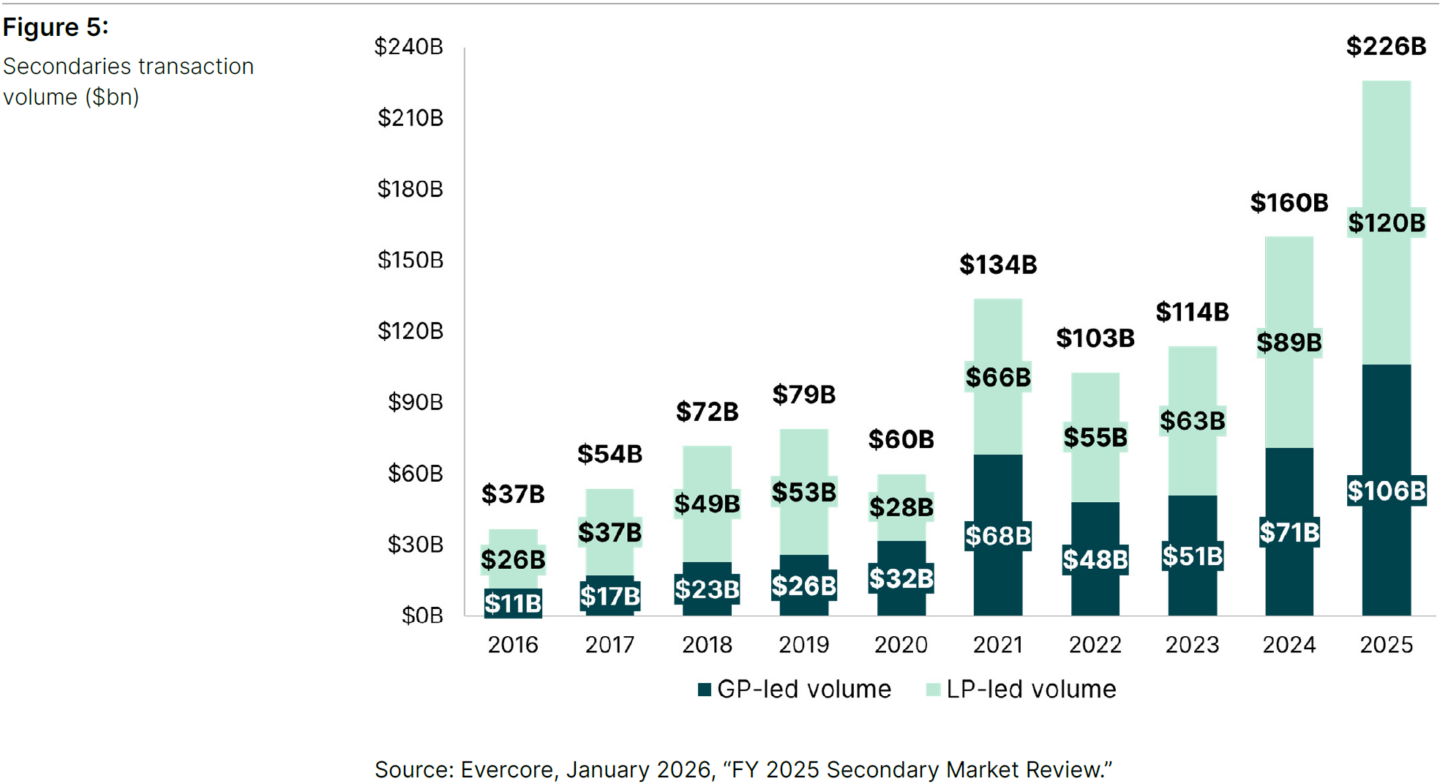
The secondaries market is gaining momentum, driven by investor demand for liquidity, portfolio flexibility, and access to high-quality assets. In 2025, transaction volumes hit a record $226 billion, reflecting a broader shift in how institutional capital is managed across private markets.⁷
LP-led deals, where investors sell stakes in private equity funds, remain the largest segment. These transactions allow limited partners to rebalance portfolios and free up capital, while buyers gain exposure to mature assets at attractive valuations. The growing sophistication of LPs is fueling continued growth in this space.
GP-led transactions are also on the rise. Fund managers are increasingly turning to continuation vehicles to hold onto high-performing assets while offering liquidity to existing investors. A backlog of sponsor-owned companies, delayed by market uncertainty, is expected to drive further activity as firms seek more strategic exit routes.
Infrastructure secondaries are emerging as a standout niche. These deals offer early distributions, discounted entry points, and access to operational assets with known performance. Infrastructure also brings portfolio benefits – lower volatility, steady income, and diversification – making it a valuable complement to private equity and private credit.
As secondaries evolve, they are becoming a central tool for investors navigating a more complex and selective private markets environment.
Investment strategies
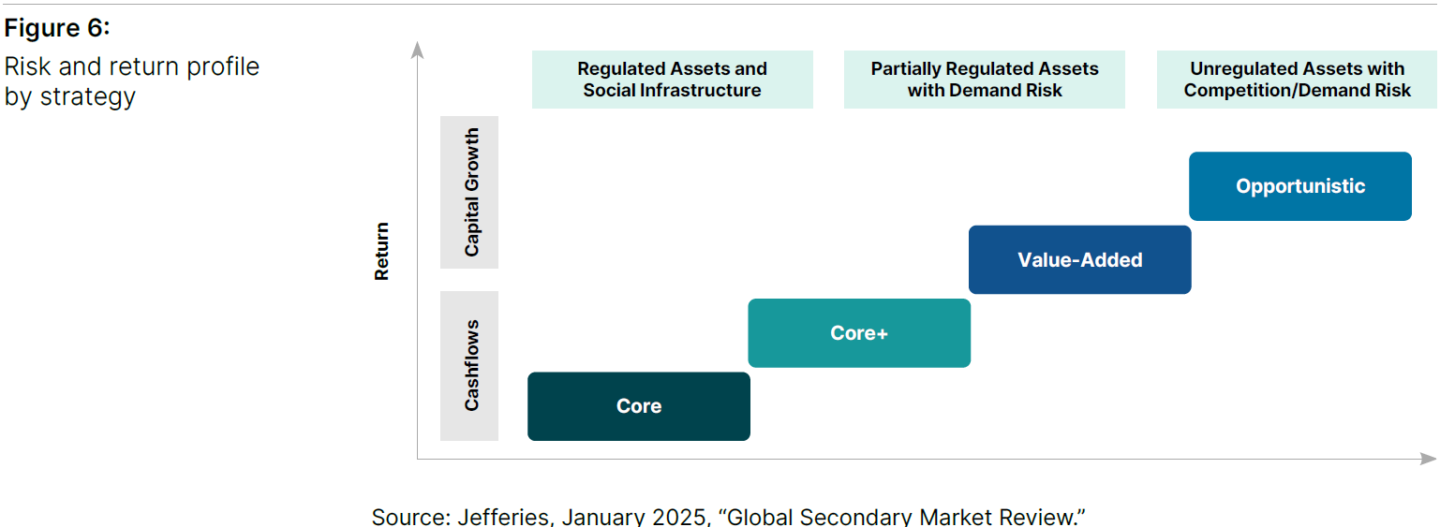
Core infrastructure assets target essential, low-risk assets in developed markets with stable cash flows and monopoly-like positions. These can include toll roads, airports, ports, and district energy plants.
Core-plus investments sit between Core and Value Add strategies in terms of risk and return. They typically offer moderate risk and return characteristics, blending the stability of Core assets with some elements of growth or operational complexity. They are likely to be essential services or facilities – including midstream energy assets, or fiber networks – with moderate operational risk and that provide steady cash flows but with some potential for upside through active management, operational improvements, or limited development exposure.
Value Add strategies target typically transitional or under-optimized assets where active management – such as via operational improvements, strategic repositioning, or technology upgrades – can create significant value. These may present moderate-to-high risk (often exposed to market risk, volume risk, or development risk) and are targeted by investors seeking capital appreciation alongside cash yield.
Opportunistic investments involve high-risk, high-return projects that may require full development or unproven technologies. Debt strategies involve senior loans to infrastructure assets, offering lower risk due to priority in the capital structure.
Infrastructure evergreen strategies can be particularly well-suited to private wealth investors. These strategies offer stable income and inflation protection, which aligns with long-term wealth preservation goals. Evergreen structures provide flexibility and access without the illiquidity inherent in traditional closed-end funds. Diversification across sectors, geographies, and stages reduces portfolio risk, making infrastructure an attractive option for private wealth portfolios.
Current Market Trends: The “Three Ds”
Decarbonization, digitization, and deglobalization are three key trends reshaping the infrastructure investment landscape. The global energy transition is driving unprecedented investment in renewables. In 2025, clean power reached 42.6% of global electricity generation. Solar and wind together accounted for 17.2% of generation, with solar at 8.7% and wind at 8.5%. Power sector emissions were essentially flat, rising just 0.04%.¹
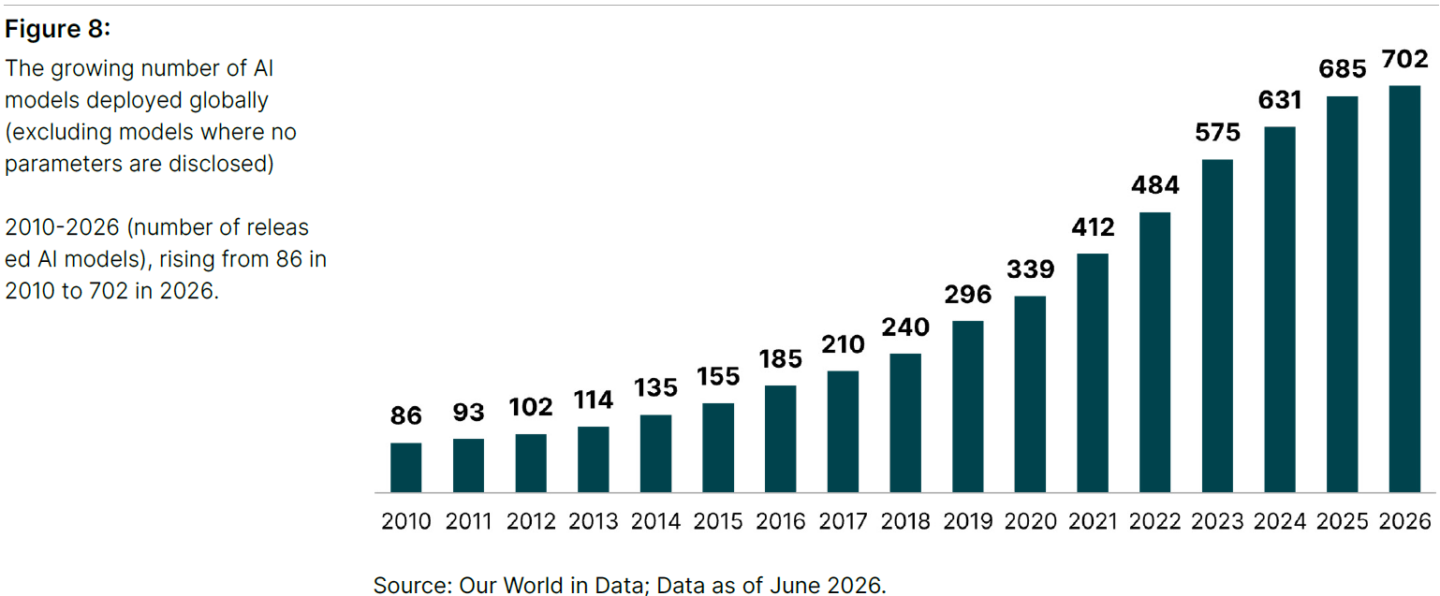
AI is reshaping infrastructure demand, with the number of AI models and their complexity growing exponentially. Models now contain billions to trillions of parameters, driving demand for data centers, which already account for 1.5% of world power usage. The resulting strain on energy infrastructure is creating new investment opportunities in both digital and traditional power assets.²
Geopolitical shifts are prompting a move toward localized infrastructure. Supply chain realignment and regionalization are increasing demand for domestic logistics, energy, and digital networks. Infrastructure strategies must now account for regional nuances and regulatory divergence.

AI in Infrastructure Investing
The increasing complexity of AI is putting greater pressure on energy infrastructure. Large-scale AI models, with billions or trillions of parameters, require significant resources for management and training.
Both digital and traditional infrastructure are seeing a significant rise in demand for AI. This demand is driving the need for more data centers, which in turn is putting upward pressure on current energy infrastructure.³
The growing number of data centers required to support AI models is creating new investment opportunities in energy infrastructure and investors must consider the balance between performance gains and the associated energy costs when evaluating AI-driven infrastructure projects.
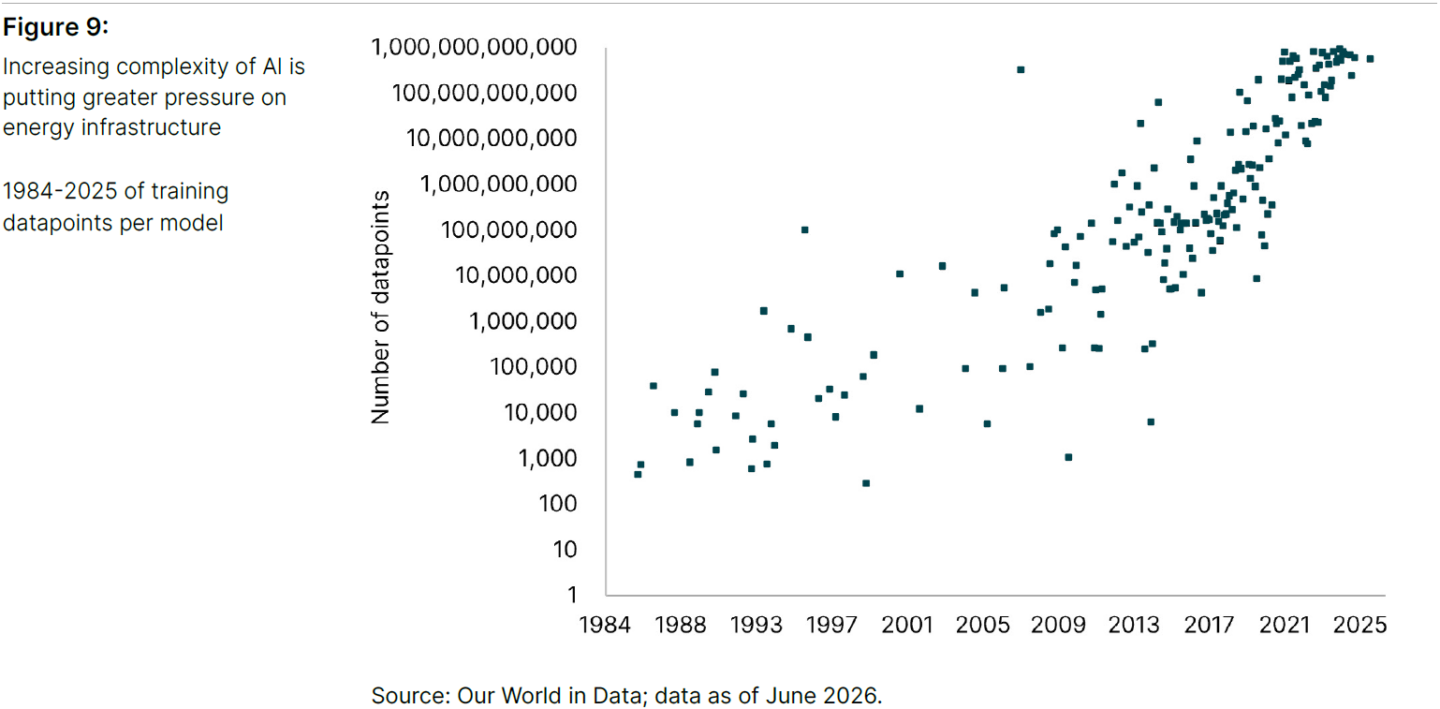
The graph above (Figure 9) illustrates the amount of training datapoints needed for the most complex generative AI models. Each of these parameters helps the model to make more accurate predictions. As the chart displays, the AI models we are most familiar with in our day-to-day lives require exponentially more datapoints than they did even a few years ago. The more datapoints used in model training, the more complex the model, and the more energy required.
Between 2020 and 2025, the number of AI models increased by approximately 340. However, the complexity of those models surged. And therefore, it requires greater energy usage, putting even more pressure on data centers and power grids globally.⁴
Forecasting AI’s energy demands on data center infrastructure
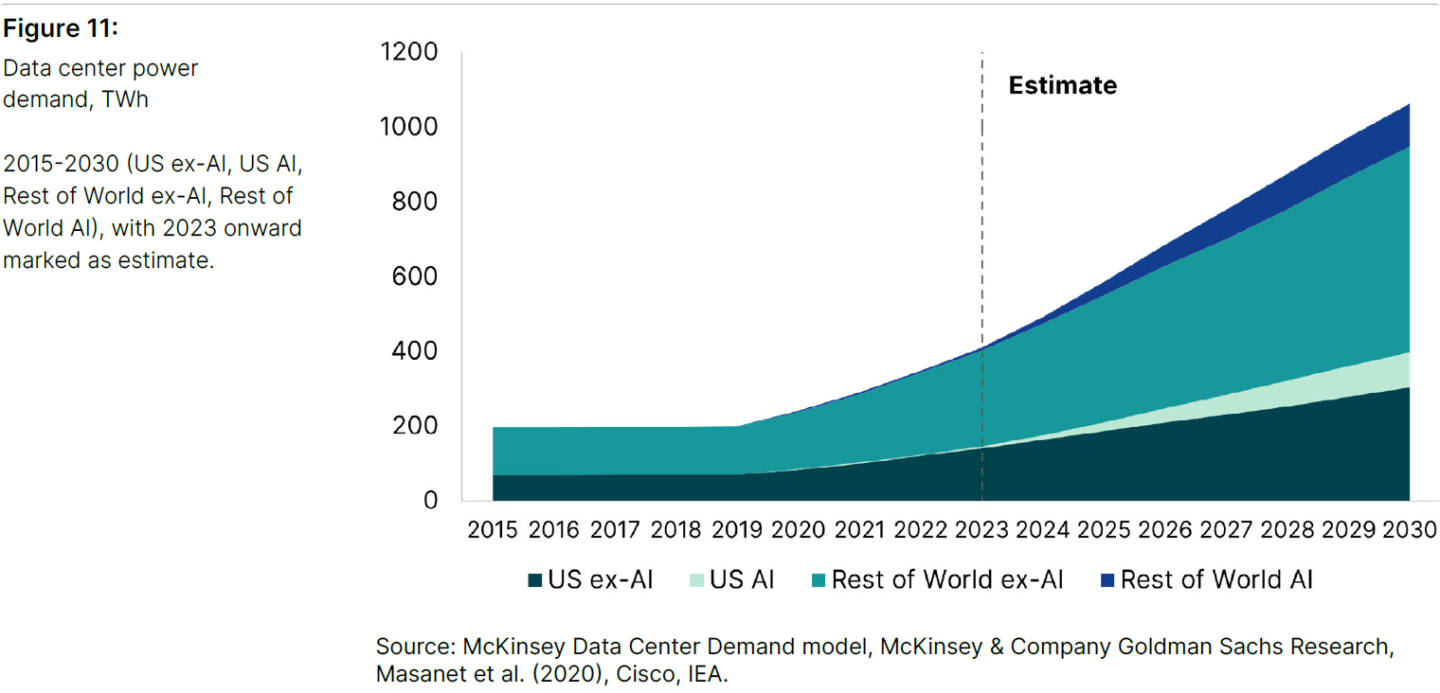
As AI models get more complex, the global race to scale AI is also colliding with a more straightforward constraint: electricity. As we have seen above, the technology is becoming more complex and ubiquitous, and with that comes a mounting pressure on the infrastructure supporting this technology. Data centers, in particular, are under increasing strain to keep pace with AI’s energy demands.
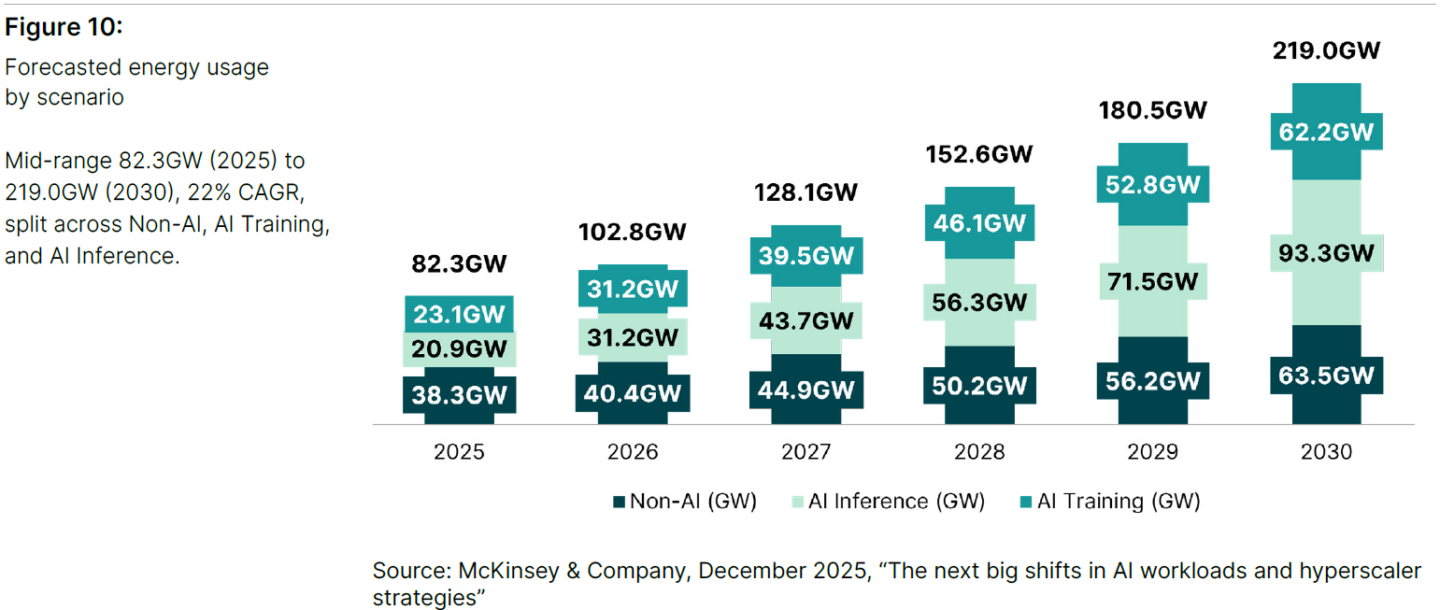
New modeling by McKinsey suggests that global data center power consumption could nearly triple by the end of the decade, rising from 82.3 GW in 2025 to nearly 219 GW by 2030, a CAGR of around 22%. This potential surge raises the prospect of a significant supply gap.
Beneath that headline figure, the composition of demand is shifting. McKinsey splits data center demand into three workloads, each growing at a different pace: non-AI demand expands at around 11% annually, AI training at around 22%, and AI inference fastest of all at around 35%. Training, the compute-intensive process of building and refining models, reaches more than 60 GW by 2030, while inference, the recurring task of running trained models to serve real-time applications, surpasses 90 GW. On this trajectory, inference overtakes training to become the dominant AI workload by 2030, accounting for more than half of all AI compute and reshaping where and how new capacity is built.⁵
Renewable energy infrastructure trends
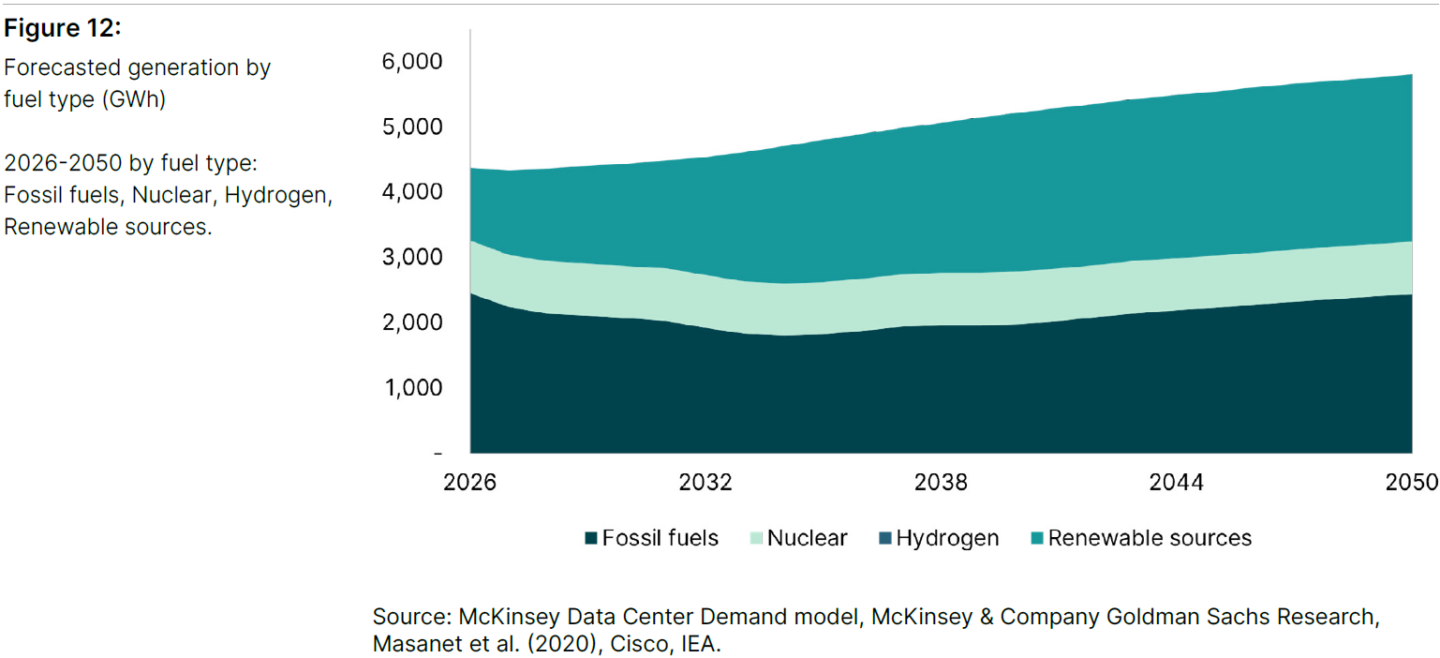
In 2025, record solar growth halted the long-running rise in fossil generation. For the first time since 2020, fossil fuel generation did not increase, recording a slight fall of 0.2% (38 TWh), as record clean power additions outpaced demand growth. Power sector emissions were essentially flat year on year.
Clean generation met all growth in electricity demand. Low-carbon sources reached 42.6% of global generation in 2025, up from 40.9% in 2024⁶, and renewables overtook coal for the first time in the modern era, at 33.8% against coal’s 33.0%.
Solar led the change, growing 30% to its highest rate in eight years and overtaking wind globally for the first time, reaching an 8.7% share, with wind at a record 8.5%. Nuclear declined to 8.9%. Battery storage continued to ease the intermittency of variable sources, shifting daytime solar into periods of higher demand. Other renewables, including bioenergy, geothermal, and hydropower, accounted for around 16.5% of global generation.⁷
The surge in renewables is creating new investment opportunities in clean energy infrastructure. Investors must consider the balance between renewable growth and the associated emissions when evaluating clean energy projects.
Pantheon is a global private markets investment firm with a 40-year heritage of generating returns for clients across private equity, private credit, infrastructure, and real estate markets. Founded in 1982, it now has assets under management of $85 billion (as of December 31, 2025), and more than 140 investment professionals operating across 12 offices on four continents. This global investment platform provides the scale and extensive, long-term relationships to deliver significant informational and sourcing capabilities across primaries, secondaries, and co-investment strategies while retaining a market-leading position focused on the private markets.