Five key takeaways from a conversation between Kathryn Leaf and Edward Fishman on why economic warfare matters more for investors than ever
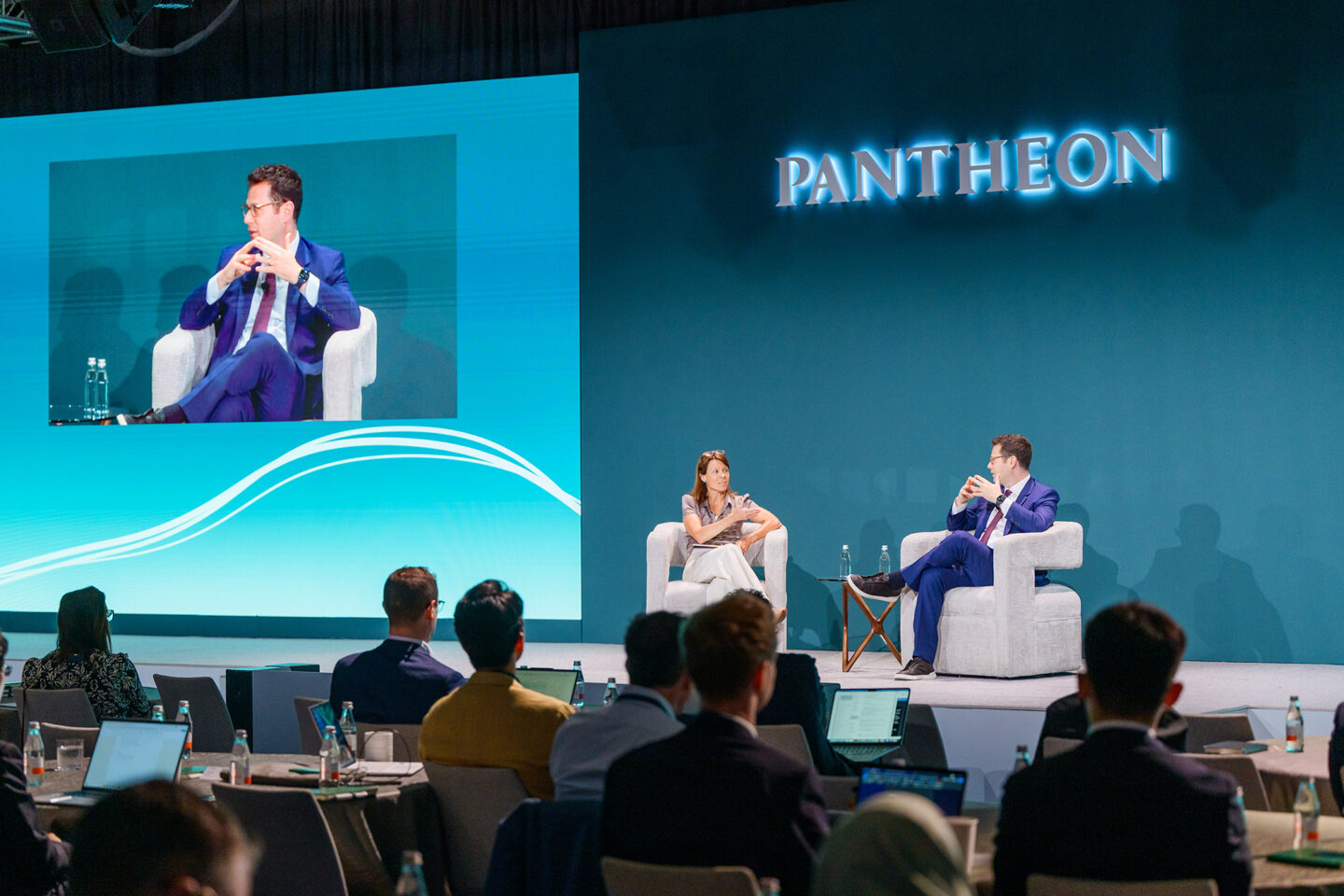
Edward Fishman, author of Chokepoints and former US sanctions official, joined Pantheon CEO Kathryn Leaf at our Annual Investor Meeting for a conversation on the weaponization of trade, the Strait of Hormuz, the future of the dollar, and what it all means for capital allocators.
1. Economic warfare is now the default mode of great power competition
Every US president this century has imposed sanctions at roughly twice the rate of their predecessor, and globally, trade restrictions have tripled in the last seven years. The reason: a global economy built for the relatively benign geopolitics of the 1990s is now operating in an environment of intensifying competition. That mismatch is the engine behind the surge in sanctions, export controls, and tariffs.
2. Every weaponized chokepoint creates an incentive to build an alternative
Dollar sanctions on Russia and Iran pushed China toward its own payments infrastructure (CIPS, e-CNY, mBridge). China’s rare-earth embargo has driven tens of billions of dollars into Western alternatives. The closure of the Strait of Hormuz is now accelerating investment in pipelines and storage that bypass it entirely. The pattern is consistent: weaponize a chokepoint, and the rest of the world spends the next decade engineering around it.
3. The dollar’s dominance is still intact, but the cracks are in payments, not reserves
China has tried to move off the dollar system since 2014 and has only gotten its trade settlement in renminbi from 15% to 30% in ten years. But it may be that payments are the first domain where a more multipolar currency order emerges That matters for investors because roughly 75–80% of global equity market cap currently sits in the US, propped up in part by dollar liquidity needs that may not hold forever.
4. The energy build-out tied to economic and data security is one of the clearest investable trends
Pipelines and storage circumventing the Strait of Hormuz, sovereign cloud infrastructure, and above all clean energy as the most secure path to energy independence. China’s battery, EV, and solar exports doubled month-on-month earlier this year as the rest of the world raced to reduce dependence on any single supplier. Expect significantly more clean energy investment globally, particularly in developing markets, over the coming years.
5. Watch two things over the next 12–18 months: emulation and the dollar
If Iran successfully monetizes control of the Strait of Hormuz, other countries sitting on their own chokepoints will face strong incentive to do the same, turning the playbook into a global norm. And watch whether China’s renminbi settlement share keeps climbing past 30%: a genuine shift in oil and trade payments away from the dollar would have real implications for US interest rates and equity valuations.